News
Creating Social Impact – The Role of Young People in the Social Impact Ecosystem
01/10/2026 18:05 — 82
On September 18, 2026, Thu Dau Mot University, in collaboration with Khoi Su Tu Tam Foundation, held the seminar “Creating Social Impact – The Role of Young People in the Social Impact Ecosystem” (K-Talk #6). The seminar was attended by Ms. Ton Nu Thi Ninh – President of the Ho Chi Minh City Peace and Development Foundation and Chairperson of the Ho Chi Minh City Peace Committee; and Mr. Nguyen Phu Duc – Director of Khoi Su Tu Tam Foundation. Representing Thu Dau Mot University were M.A. Tran Van Nam – Deputy Secretary of the Party Committee; M.A. Vuong The Hung – Vice Rector; along with leaders of departments and affiliated units, staff, lecturers, and students from the School of Law and Management.
Young People – Drivers of Social Impact
Delivering the welcome remarks, M.A. Tran Van Nam – Deputy Secretary of the Party Committee – expressed his sincere appreciation to Ms. Ton Nu Thi Ninh and Khoi Su Tu Tam Foundation for choosing Thu Dau Mot University as a partner host for K-Talk #6. According to M.A. Tran Van Nam, the seminar theme is closely aligned with the university’s educational priorities and its long-standing mission of community service. Guided by the philosophy “Experiential Learning – Scientific Research – Community Service,” Thu Dau Mot University seeks to equip students with specialized knowledge, a strong sense of social responsibility, the capacity to take action, and a commitment to sustainable development. This commitment is reflected in volunteer activities, community service, scientific research and practical learning experiences for students. Within this learning environment, students have opportunities to apply their knowledge and experience in real-world settings, identify community issues and gradually build the capacity to help address social challenges. M.A. Tran Van Nam emphasized that for young people’s initiatives to create lasting value, individuals need to be connected to broader networks of support. As social issues become increasingly diverse and complex, they require the involvement of multiple stakeholders, including government agencies, businesses, universities, social organizations and communities. Each can contribute knowledge, technology, financial resources, policy support, networks and organizational capacity; when these resources are connected effectively, young people’s ideas and initiatives are better positioned to develop into solutions that respond to real needs.
Addressing the students, M.A. Tran Van Nam encouraged them to broaden their perspectives, connect classroom learning with real-world issues, and turn youthful enthusiasm into responsible action. “You are not here merely to listen; you are also helping to shape the future. The real-life stories, practical experience in implementing initiatives, and insights shared by the speakers today will help you better understand your role in the social impact ecosystem – from participating in activities to initiating ideas, connecting people and resources, and developing solutions. The university will continue to provide an environment where students can learn through experience, engage with real-world contexts and take an active role in addressing community issues,” M.A. Tran Van Nam emphasized.
Drawing on his experience in social initiatives, Mr. Nguyen Phu Duc – Director of Khoi Su Tu Tam Foundation – highlighted the need to build an ecosystem capable of connecting stakeholders and resources in response to the increasingly diverse needs of communities. According to Mr. Nguyen Phu Duc, today’s social issues are often interconnected and therefore require coordination among multiple parties rather than relying on the capacity of a single individual or organization. Sharing knowledge, connecting experts, mobilizing resources and coordinating the implementation of initiatives provide the foundation for social impact work to be carried out in a more structured, effective and sustainable way. With this approach, Khoi Su Tu Tam Foundation aims to build a knowledge platform that connects organizations, experts, communities and social resources, while enabling young people to engage with social impact work in a more structured way. The goal is not only to encourage a spirit of community service, but also to help young people develop the awareness, methods and capabilities needed to help address community issues.
To put this approach into practice, the Foundation has prioritized expanding cooperation with universities, where knowledge, young talent and creative potential come together to support social initiatives. Through networking programs, knowledge sharing, the development of learning materials and spaces for dialogue, the Foundation seeks to connect students more directly with real community issues while giving young people opportunities to learn about relevant models, methods and sources of support. Mr. Nguyen Phu Duc said that the Foundation is currently working with four universities in southern Vietnam, including the School of Law and Management at Thu Dau Mot University. This cooperation helps strengthen the connection between higher education and social initiatives, enabling young people to better understand their roles, build their capabilities and take part in initiatives that create value for communities.
The Social Impact Ecosystem – From Goodwill to Sustainable Change
In the first discussion session, Ms. Ton Nu Thi Ninh, President of the Ho Chi Minh City Peace and Development Foundation and Chairperson of the Ho Chi Minh City Peace Committee, shared her perspective on philanthropy in today’s social context, drawing on her many years of experience in diplomacy, peace and development. According to Ms. Ton Nu Thi Ninh, philanthropy is an important part of social development, but its value does not lie in isolated acts of giving. Rather, it lies in the ability to create positive and sustainable change for both those receiving support and the wider community.
Ms. Ton Nu Thi Ninh noted that philanthropy has long existed in many cultures, religions and communities in different forms. However, as social needs become more diverse, philanthropic work needs a more organized approach. Good intentions are an essential starting point, but they are not enough to create meaningful and sustainable social impact. Effective philanthropic work requires strong organizational, governance and implementation capabilities, much like running an enterprise. Throughout the process, organizations need to assess not only immediate results but also medium- and long-term impact, while ensuring that contributions are used for the right purposes and as effectively as possible. Accountability must also be ensured through systematic and transparent reporting to individual and institutional donors, as well as relevant government authorities. The ability to turn goodwill into purposeful, methodical, measurable and sustainable action is what distinguishes short-term charitable assistance from philanthropic work that contributes to broader social and national development.
From this perspective, Ms. Ton Nu Thi Ninh emphasized the need to improve effectiveness, transparency and accountability in philanthropic work. Support for an individual or a group should not stop at addressing immediate hardship; it should also help those receiving support gradually build their own capabilities, take greater initiative in improving their lives, and go on to create value for others. Philanthropy then becomes more than an act of giving: it becomes a purposeful process of creating social impact that can be sustained over the long term.
Ms. Ton Nu Thi Ninh also raised the issue of professionalism in philanthropy. In her view, the field requires knowledge, standards, experience, implementation methods and sound principles of resource management. Meaningful philanthropic work cannot be driven by impulse or goodwill alone; it requires the ability to organize, manage and evaluate the effectiveness of the resources mobilized. This approach also calls for stronger support from government agencies and the appropriate mobilization of resources from across society.
Seen in this light, the concept of a social impact ecosystem extends beyond the relationship between giver and recipient. Government, businesses, universities, social organizations, foundations and communities all have distinct roles to play. Knowledge, finance, technology, policy, networks and organizational capacity are resources that need to be coordinated according to the issue and the group being served. When these resources are connected effectively, philanthropy can move beyond short-term assistance toward initiatives that address underlying causes and create lasting impact.
Within this ecosystem, Ms. Ton Nu Thi Ninh also highlighted the role of social enterprises – models that combine business activities with a commitment to addressing social problems. Business resources and operating models can be used to sustain social initiatives over time, creating new ways to sustain philanthropic and social-impact initiatives over the long term.
Taken together, the discussion offered a broader understanding of philanthropy: one that moves beyond giving toward building capacity, solving problems and creating change with lasting value. It also helps young people recognize that participation in social initiatives need not be limited to volunteering. With knowledge, professional expertise, the ability to build connections and a sense of responsibility, young people can take on many roles within the ecosystem – as initiators, organizers, people who connect resources and stakeholders, or those who directly design and implement solutions for communities.
The Role of Young People in the Social Impact Ecosystem
In the second discussion session, Mr. Nguyen Minh Hau – Founder and Chairman of V.Gen Network for Vietnam – and Mr. Thach Tran Bach Long – Founder and Project Coordinator – shared real-world stories showing how young people are working to address social issues. Drawing on their experience in implementing community initiatives, the two speakers shared specific situations, challenges encountered while organizing activities, and ways of identifying and mobilizing resources so that an idea can move from concept to practice.
Through the story of people with albinism and related awareness-raising activities, the speakers showed that a social impact initiative often begins by identifying an issue that remains little known or has not received adequate attention. When approaching a social issue, young people need to take time to understand the current situation, listen directly to the affected community and identify actual needs, rather than viewing the issue only from the perspective of those who want to help. This approach helps community initiatives reach the right people, reduce reliance on short-term assistance and provide a foundation for developing appropriate solutions.
Drawing on their practical experience, the two speakers also made clear that young people can participate in the social impact ecosystem in many different roles. Some begin as volunteers, joining a project and gaining experience; others take on professional roles or coordination responsibilities; some connect individuals, organizations and resources; and others go further by launching an initiative or developing their own organizational model. Each role has value and can prepare young people for greater responsibilities as they build sufficient knowledge, skills and experience.
One point emphasized by the speakers was that the transition from participant to initiator does not happen overnight. Young people need to take a proactive approach to learning and develop professional expertise as well as organizational, communication, teamwork and project management skills. More importantly, pursuing a social initiative requires persistence in the face of challenges involving staffing, funding, expertise and long-term operational viability. From an initial idea, those involved need to validate the need, refine their approach and build a team capable of pursuing the goal together.
The speakers also stressed the importance of support networks and collaboration in developing a social initiative. Young people do not need to have every resource in place before they can begin a community activity. During implementation, they can seek support from professional mentors, universities, foundations, social organizations, businesses and like-minded individuals. Each stakeholder can contribute a different kind of resource – from knowledge and experience to human resources, funding, technology, relationships and networking opportunities. Knowing what support is needed, identifying the right people who can provide it, and coordinating appropriate resources are therefore important parts of young people’s capacity to implement initiatives.
Through the stories of specific initiatives, the discussion also raised the question of how impact can be sustained over time. A community activity may produce positive results at a particular moment, but to become a sustainable model, an initiative needs to address questions about actual needs, how it will operate, what resources can sustain it, and what value it brings to the community. For suitable initiatives, adopting a social-enterprise model can also offer a way to address social problems while generating the resources needed to sustain the work.
The practical experiences shared at the seminar encouraged young people to take a more proactive approach to social issues: begin by understanding the problem, listen to the community, choose an appropriate way to participate, and gradually build the capacity to create value. Students may begin as volunteers and later move into roles as project team members, coordinators, connectors or initiative founders. Each role is a way of taking part in the social impact ecosystem and an opportunity for young people to apply their knowledge, professional expertise and capabilities to specific community challenges.
.jpg)
M.A. Tran Van Nam – Deputy Secretary of the Party Committee – emphasized the proactive role of students in social impact initiatives.
.jpg)
Mr. Nguyen Phu Duc – Director of Khoi Su Tu Tam Foundation – discussed the importance of connecting and mobilizing resources to create social impact.
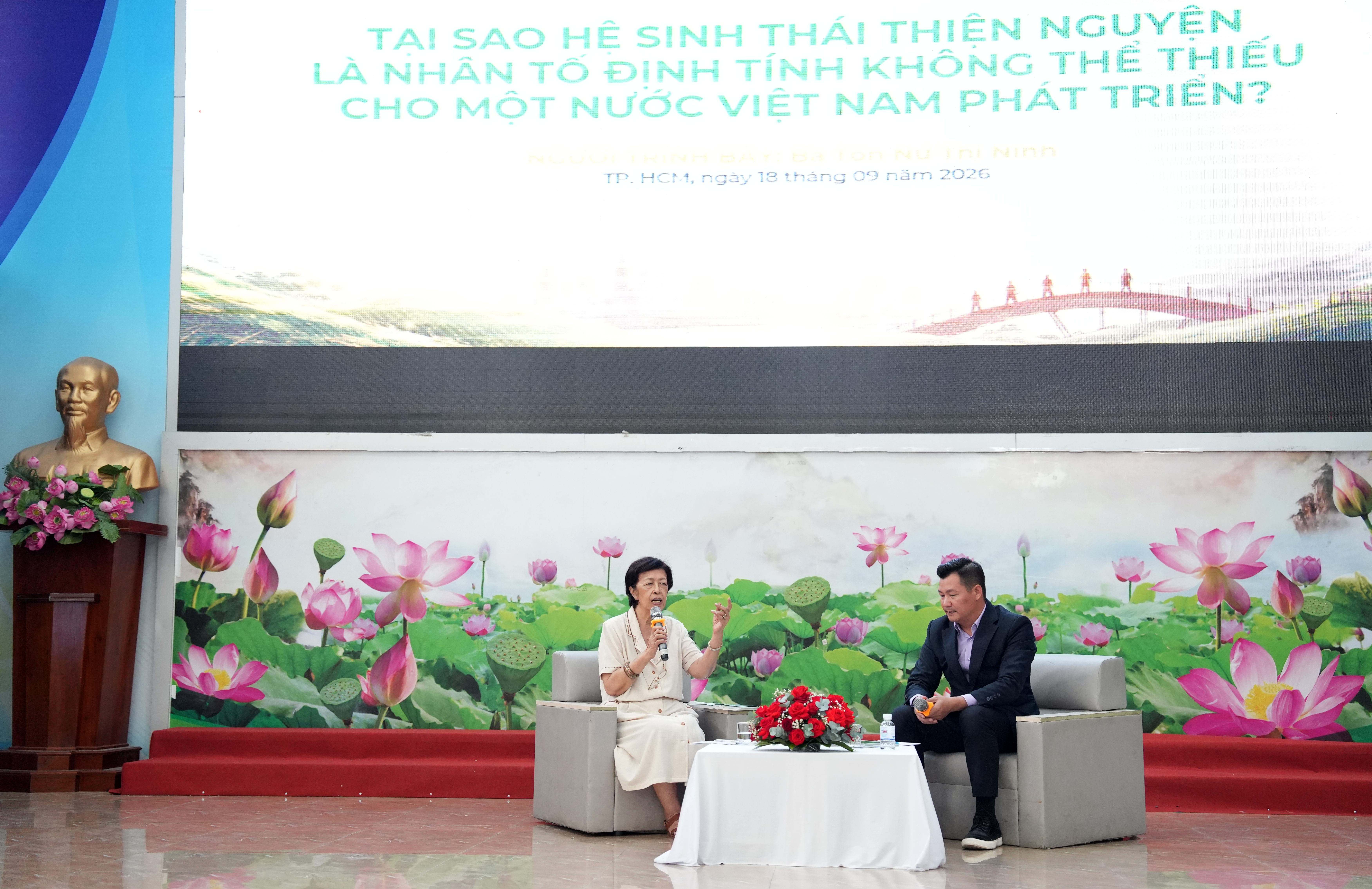
Ms. Ton Nu Thi Ninh shared her perspective on how philanthropic work can become more professional, effective and sustainable.
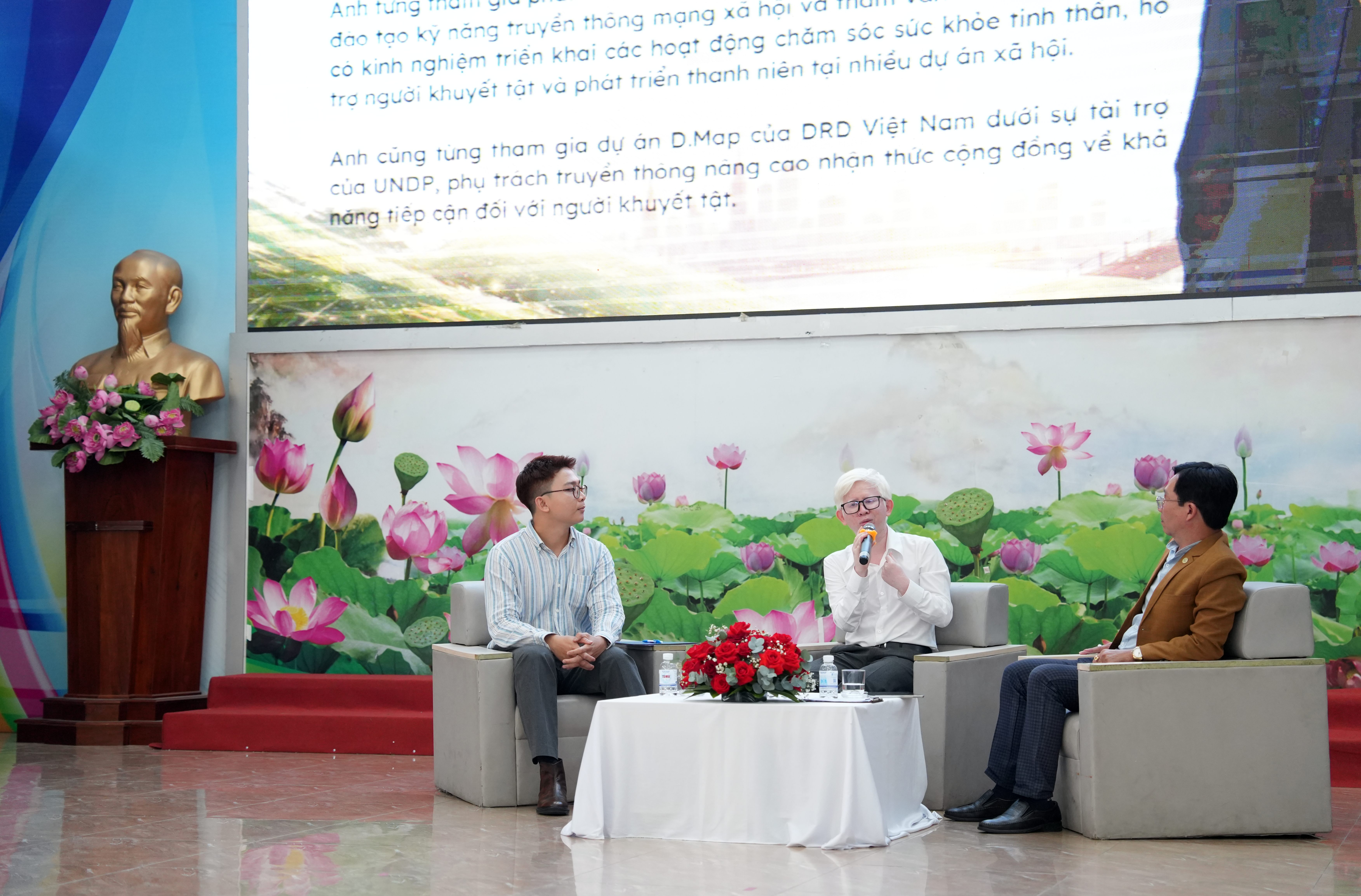
Speaker Thach Tran Bach Long shared his experience in implementing community projects.
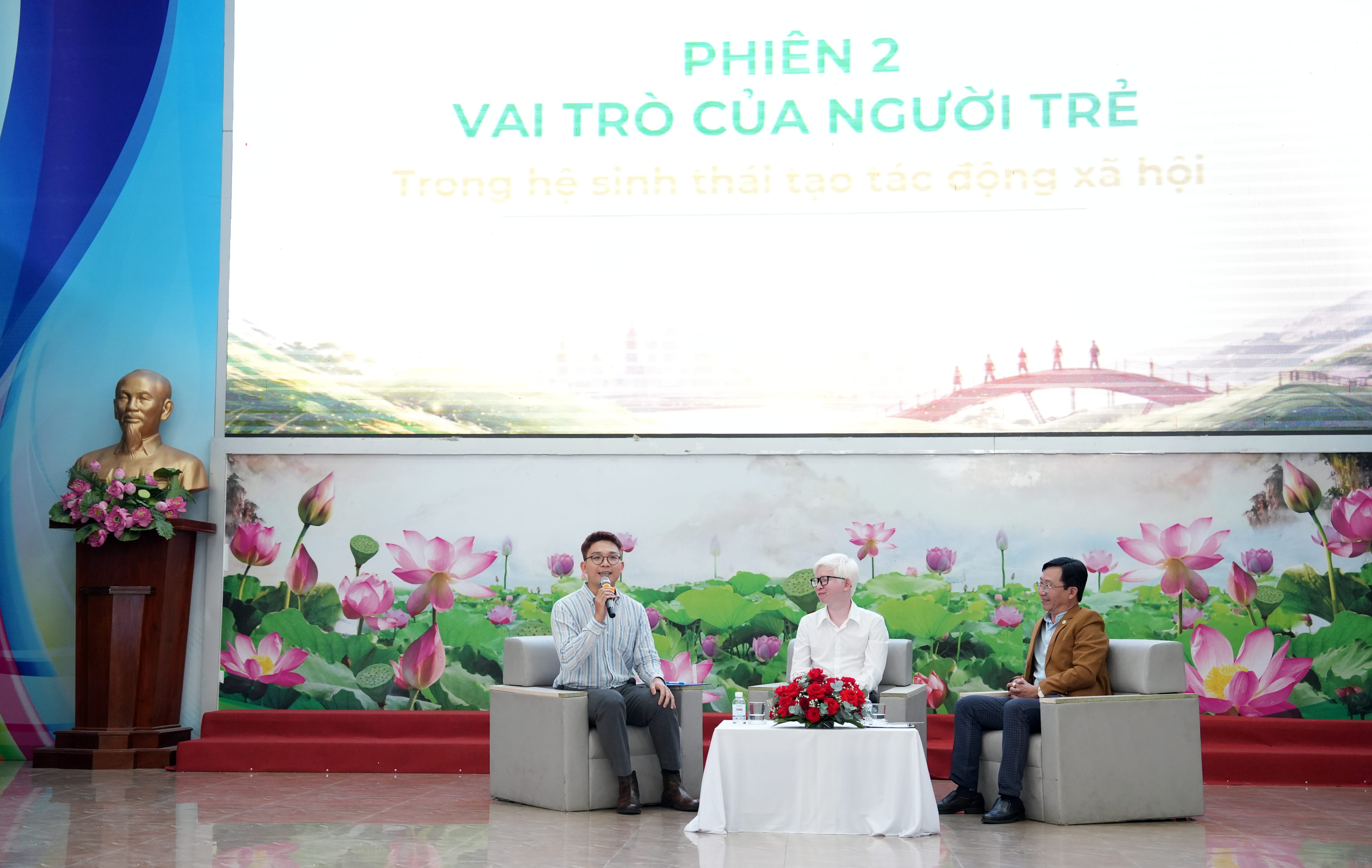
Speaker Nguyen Minh Hau discussed ways young people can participate in the social impact ecosystem.
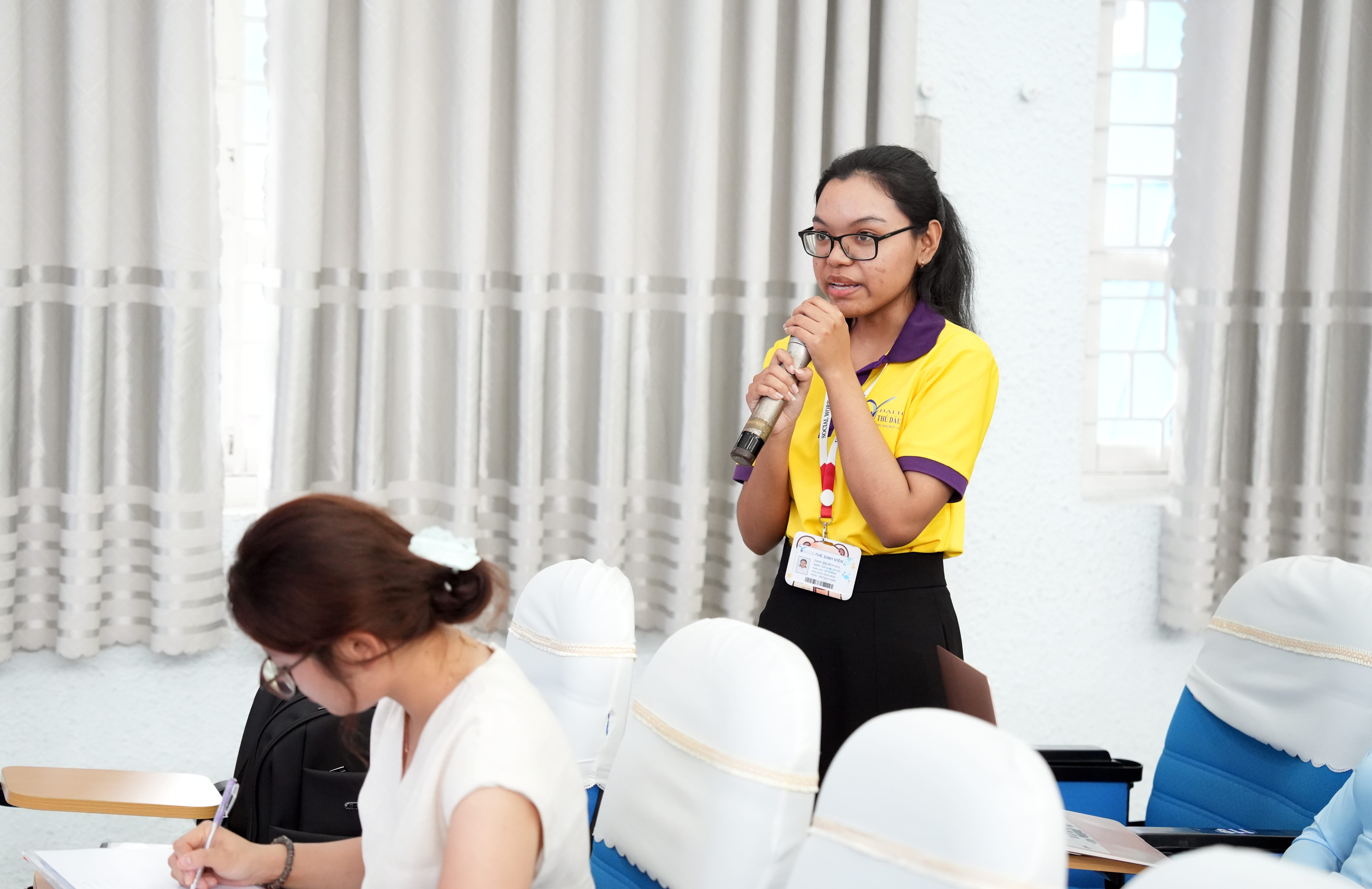
Students actively engaged with the speakers to explore how young people can get involved and make a positive impact in their communities.
.jpg)
On this occasion, Khoi Su Tu Tam Foundation presented a collection of books to Thu Dau Mot University, adding to the resources available for learning about and exploring social impact.
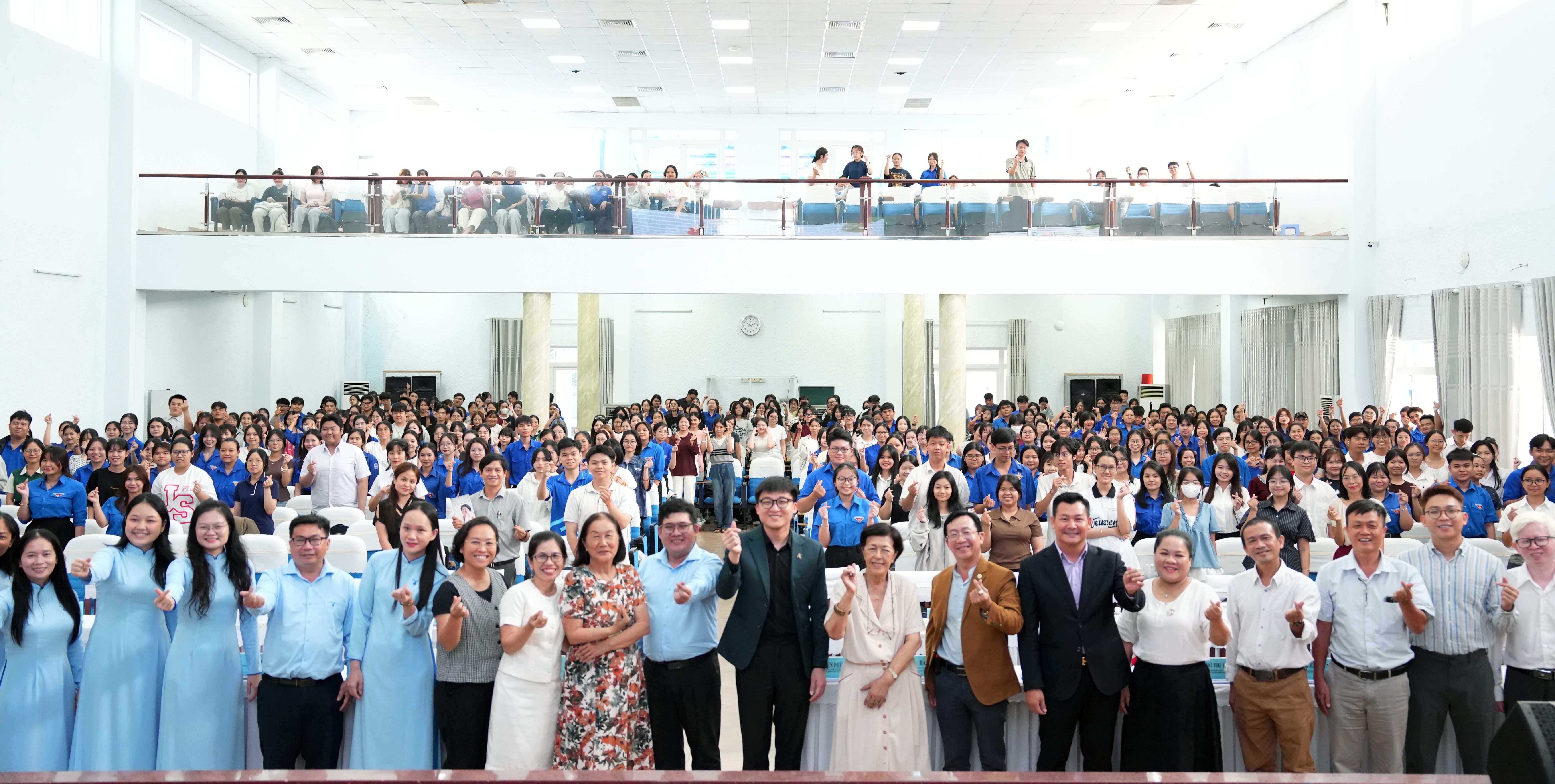
K-Talk #6 brought together knowledge, practical experience and community-oriented initiatives in a shared space for dialogue.
Young People – Drivers of Social Impact
Delivering the welcome remarks, M.A. Tran Van Nam – Deputy Secretary of the Party Committee – expressed his sincere appreciation to Ms. Ton Nu Thi Ninh and Khoi Su Tu Tam Foundation for choosing Thu Dau Mot University as a partner host for K-Talk #6. According to M.A. Tran Van Nam, the seminar theme is closely aligned with the university’s educational priorities and its long-standing mission of community service. Guided by the philosophy “Experiential Learning – Scientific Research – Community Service,” Thu Dau Mot University seeks to equip students with specialized knowledge, a strong sense of social responsibility, the capacity to take action, and a commitment to sustainable development. This commitment is reflected in volunteer activities, community service, scientific research and practical learning experiences for students. Within this learning environment, students have opportunities to apply their knowledge and experience in real-world settings, identify community issues and gradually build the capacity to help address social challenges. M.A. Tran Van Nam emphasized that for young people’s initiatives to create lasting value, individuals need to be connected to broader networks of support. As social issues become increasingly diverse and complex, they require the involvement of multiple stakeholders, including government agencies, businesses, universities, social organizations and communities. Each can contribute knowledge, technology, financial resources, policy support, networks and organizational capacity; when these resources are connected effectively, young people’s ideas and initiatives are better positioned to develop into solutions that respond to real needs.
Addressing the students, M.A. Tran Van Nam encouraged them to broaden their perspectives, connect classroom learning with real-world issues, and turn youthful enthusiasm into responsible action. “You are not here merely to listen; you are also helping to shape the future. The real-life stories, practical experience in implementing initiatives, and insights shared by the speakers today will help you better understand your role in the social impact ecosystem – from participating in activities to initiating ideas, connecting people and resources, and developing solutions. The university will continue to provide an environment where students can learn through experience, engage with real-world contexts and take an active role in addressing community issues,” M.A. Tran Van Nam emphasized.
Drawing on his experience in social initiatives, Mr. Nguyen Phu Duc – Director of Khoi Su Tu Tam Foundation – highlighted the need to build an ecosystem capable of connecting stakeholders and resources in response to the increasingly diverse needs of communities. According to Mr. Nguyen Phu Duc, today’s social issues are often interconnected and therefore require coordination among multiple parties rather than relying on the capacity of a single individual or organization. Sharing knowledge, connecting experts, mobilizing resources and coordinating the implementation of initiatives provide the foundation for social impact work to be carried out in a more structured, effective and sustainable way. With this approach, Khoi Su Tu Tam Foundation aims to build a knowledge platform that connects organizations, experts, communities and social resources, while enabling young people to engage with social impact work in a more structured way. The goal is not only to encourage a spirit of community service, but also to help young people develop the awareness, methods and capabilities needed to help address community issues.
To put this approach into practice, the Foundation has prioritized expanding cooperation with universities, where knowledge, young talent and creative potential come together to support social initiatives. Through networking programs, knowledge sharing, the development of learning materials and spaces for dialogue, the Foundation seeks to connect students more directly with real community issues while giving young people opportunities to learn about relevant models, methods and sources of support. Mr. Nguyen Phu Duc said that the Foundation is currently working with four universities in southern Vietnam, including the School of Law and Management at Thu Dau Mot University. This cooperation helps strengthen the connection between higher education and social initiatives, enabling young people to better understand their roles, build their capabilities and take part in initiatives that create value for communities.
The Social Impact Ecosystem – From Goodwill to Sustainable Change
In the first discussion session, Ms. Ton Nu Thi Ninh, President of the Ho Chi Minh City Peace and Development Foundation and Chairperson of the Ho Chi Minh City Peace Committee, shared her perspective on philanthropy in today’s social context, drawing on her many years of experience in diplomacy, peace and development. According to Ms. Ton Nu Thi Ninh, philanthropy is an important part of social development, but its value does not lie in isolated acts of giving. Rather, it lies in the ability to create positive and sustainable change for both those receiving support and the wider community.
Ms. Ton Nu Thi Ninh noted that philanthropy has long existed in many cultures, religions and communities in different forms. However, as social needs become more diverse, philanthropic work needs a more organized approach. Good intentions are an essential starting point, but they are not enough to create meaningful and sustainable social impact. Effective philanthropic work requires strong organizational, governance and implementation capabilities, much like running an enterprise. Throughout the process, organizations need to assess not only immediate results but also medium- and long-term impact, while ensuring that contributions are used for the right purposes and as effectively as possible. Accountability must also be ensured through systematic and transparent reporting to individual and institutional donors, as well as relevant government authorities. The ability to turn goodwill into purposeful, methodical, measurable and sustainable action is what distinguishes short-term charitable assistance from philanthropic work that contributes to broader social and national development.
From this perspective, Ms. Ton Nu Thi Ninh emphasized the need to improve effectiveness, transparency and accountability in philanthropic work. Support for an individual or a group should not stop at addressing immediate hardship; it should also help those receiving support gradually build their own capabilities, take greater initiative in improving their lives, and go on to create value for others. Philanthropy then becomes more than an act of giving: it becomes a purposeful process of creating social impact that can be sustained over the long term.
Ms. Ton Nu Thi Ninh also raised the issue of professionalism in philanthropy. In her view, the field requires knowledge, standards, experience, implementation methods and sound principles of resource management. Meaningful philanthropic work cannot be driven by impulse or goodwill alone; it requires the ability to organize, manage and evaluate the effectiveness of the resources mobilized. This approach also calls for stronger support from government agencies and the appropriate mobilization of resources from across society.
Seen in this light, the concept of a social impact ecosystem extends beyond the relationship between giver and recipient. Government, businesses, universities, social organizations, foundations and communities all have distinct roles to play. Knowledge, finance, technology, policy, networks and organizational capacity are resources that need to be coordinated according to the issue and the group being served. When these resources are connected effectively, philanthropy can move beyond short-term assistance toward initiatives that address underlying causes and create lasting impact.
Within this ecosystem, Ms. Ton Nu Thi Ninh also highlighted the role of social enterprises – models that combine business activities with a commitment to addressing social problems. Business resources and operating models can be used to sustain social initiatives over time, creating new ways to sustain philanthropic and social-impact initiatives over the long term.
Taken together, the discussion offered a broader understanding of philanthropy: one that moves beyond giving toward building capacity, solving problems and creating change with lasting value. It also helps young people recognize that participation in social initiatives need not be limited to volunteering. With knowledge, professional expertise, the ability to build connections and a sense of responsibility, young people can take on many roles within the ecosystem – as initiators, organizers, people who connect resources and stakeholders, or those who directly design and implement solutions for communities.
The Role of Young People in the Social Impact Ecosystem
In the second discussion session, Mr. Nguyen Minh Hau – Founder and Chairman of V.Gen Network for Vietnam – and Mr. Thach Tran Bach Long – Founder and Project Coordinator – shared real-world stories showing how young people are working to address social issues. Drawing on their experience in implementing community initiatives, the two speakers shared specific situations, challenges encountered while organizing activities, and ways of identifying and mobilizing resources so that an idea can move from concept to practice.
Through the story of people with albinism and related awareness-raising activities, the speakers showed that a social impact initiative often begins by identifying an issue that remains little known or has not received adequate attention. When approaching a social issue, young people need to take time to understand the current situation, listen directly to the affected community and identify actual needs, rather than viewing the issue only from the perspective of those who want to help. This approach helps community initiatives reach the right people, reduce reliance on short-term assistance and provide a foundation for developing appropriate solutions.
Drawing on their practical experience, the two speakers also made clear that young people can participate in the social impact ecosystem in many different roles. Some begin as volunteers, joining a project and gaining experience; others take on professional roles or coordination responsibilities; some connect individuals, organizations and resources; and others go further by launching an initiative or developing their own organizational model. Each role has value and can prepare young people for greater responsibilities as they build sufficient knowledge, skills and experience.
One point emphasized by the speakers was that the transition from participant to initiator does not happen overnight. Young people need to take a proactive approach to learning and develop professional expertise as well as organizational, communication, teamwork and project management skills. More importantly, pursuing a social initiative requires persistence in the face of challenges involving staffing, funding, expertise and long-term operational viability. From an initial idea, those involved need to validate the need, refine their approach and build a team capable of pursuing the goal together.
The speakers also stressed the importance of support networks and collaboration in developing a social initiative. Young people do not need to have every resource in place before they can begin a community activity. During implementation, they can seek support from professional mentors, universities, foundations, social organizations, businesses and like-minded individuals. Each stakeholder can contribute a different kind of resource – from knowledge and experience to human resources, funding, technology, relationships and networking opportunities. Knowing what support is needed, identifying the right people who can provide it, and coordinating appropriate resources are therefore important parts of young people’s capacity to implement initiatives.
Through the stories of specific initiatives, the discussion also raised the question of how impact can be sustained over time. A community activity may produce positive results at a particular moment, but to become a sustainable model, an initiative needs to address questions about actual needs, how it will operate, what resources can sustain it, and what value it brings to the community. For suitable initiatives, adopting a social-enterprise model can also offer a way to address social problems while generating the resources needed to sustain the work.
The practical experiences shared at the seminar encouraged young people to take a more proactive approach to social issues: begin by understanding the problem, listen to the community, choose an appropriate way to participate, and gradually build the capacity to create value. Students may begin as volunteers and later move into roles as project team members, coordinators, connectors or initiative founders. Each role is a way of taking part in the social impact ecosystem and an opportunity for young people to apply their knowledge, professional expertise and capabilities to specific community challenges.
M.A. Tran Van Nam – Deputy Secretary of the Party Committee – emphasized the proactive role of students in social impact initiatives.
Mr. Nguyen Phu Duc – Director of Khoi Su Tu Tam Foundation – discussed the importance of connecting and mobilizing resources to create social impact.
Ms. Ton Nu Thi Ninh shared her perspective on how philanthropic work can become more professional, effective and sustainable.
Speaker Thach Tran Bach Long shared his experience in implementing community projects.
Speaker Nguyen Minh Hau discussed ways young people can participate in the social impact ecosystem.
Students actively engaged with the speakers to explore how young people can get involved and make a positive impact in their communities.
On this occasion, Khoi Su Tu Tam Foundation presented a collection of books to Thu Dau Mot University, adding to the resources available for learning about and exploring social impact.
K-Talk #6 brought together knowledge, practical experience and community-oriented initiatives in a shared space for dialogue.
Posts on the same topic
 01/10/2026 6:08:09 CH — 94
On September 29, 2026, Thu Dau Mot University held its orientation day for the 2026–2027 academic year. The ceremony welcomed new students into the university and set key action priorities for improving training quality, research, innovation, and service to learners.
 01/10/2026 6:02:57 CH — 91
On the morning of September 5, 2026, the Korean Chamber of Commerce and Industry in Vietnam (KOCHAM HCMC - Binh Duong) awarded 35 scholarships to Korean Language majors at Thu Dau Mot University. The scholarships were presented to students who had excelled in both their studies and personal development, as well as to students facing financial hardship who had shown determination and perseverance in their studies. The total value of the 2026 scholarships was VND 190 million.
 31/08/2026 7:57:08 SA — 213
As part of The University Innovation Idea Contest (INNOSTAR 2026) and the HCMC K-Brand Expo 2026, on 26 August, 2026, Thu Dau Mot University teamed up with Ho Chi Minh City Innovation and Entrepreneurship Center to host the Vietnam-Korea cultural exchange program "A Piece of Vietnam." The event created an additional space for Vietnamese and Korean students to meet and explore each other's cultures, complementing the startup and innovation networking activities within the INNOSTAR 2026 framework.
 31/08/2026 7:38:57 SA — 190
Designed to inspire an entrepreneurial mindset aligned with green development and digital transformation, the forum “Green Up – Awakening Green Ideas, Shaping a Digital Future” provided a platform for Thu Dau Mot University students to engage directly with entrepreneurs and experts on how to develop ideas, test solutions, and gradually put initiatives into practice.
 30/07/2026 5:36:38 CH — 249
On December 5, 2020, Thu Dau Mot University hosted the Seminar on Development Strategy of Thu Dau Mot University for 2035, with long-term vision extending to 2050. This seminar served as a critical platform to review, refine, and enhance strategic directions that will guide the university's development trajectory in the coming decades.
 30/07/2026 5:26:14 CH — 307
5 December, 2025 - A delegation from Kyung Hee University visited Thu Dau Mot University to discuss collaborative programs in training, scientific research, and cultural exchange.
 30/07/2026 5:18:10 CH — 213
On November 3, 2025, Thu Dau Mot University solemnly held a signing ceremony for a Memorandum of Understanding (MOU) with the Military School – Ho Chi Minh City Command to implement a joint training program on national defense and security education for students.
 29/07/2026 2:57:14 CH — 264
To prepare for its registration in the THE Sustainability Impact Ratings 2027 - a ranking that evaluates universities' contributions to the United Nations' 17 Sustainable Development Goals (SDGs) - Thu Dau Mot University held a training workshop on 21 July 2026 on embedding the SDGs into its operations.
 29/07/2026 10:44:00 SA — 189
In order to strengthen connections with stakeholders and gather feedback for quality assurance, Thu Dau Mot University organized its 1st Stakeholders Meeting of 2026 on July 25, 2026. This annual event aims to build a multi-dimensional consultation mechanism, contributing to the improvement of training programs, enhancing educational quality, and meeting workforce development needs in the new context.
 01/07/2026 10:58:04 SA — 299
Following the solemn and emotional atmosphere of the first day, on June 28, 2026, Thu Dau Mot University continued to host the 2026 Graduation Ceremony for students from the School of Economics and Finance, the School of Law and Management, the Institute of Green Technology and Sustainable Development, and various other training units. Thousands of new bachelors and engineers officially concluded their academic journey at the university, embarking on a new path filled with high expectations and a desire to contribute.
 Đang tải...
